Thursday, 28 November 2013

Simplicity's tightrope

Many critics (and thus poets) equate verbal fireworks with poetic risk-taking and depth. That might sometimes be right, but the opposite can also be true.

Syntactic simplicity is just as capable of ambition and is even more dangerous as its opposite number. Moreover, there's no gorgeous language to hide behind if the verse falls flat on its face. As a consequence, I hugely admire poets who write in such a way.

Hamish Whyte is a case in point, and his new HappenStance pamphlet, Hannah, are you listening? is an excellent example of such a kind of verse. Yes, there are poetic failures in the book, as in any collection. Yes, they are stripped naked for inspection. However, that also means that the successes are crystalline and memorable. One such instance is the ending to the title poem:

"...It's only a tiny chime
but I hope you hear it through ineluctable time."

The musical effect of the assonance is heightened by Whyte's semantic clarity. What's more, his poetic method means that strands of observation stand out, as in the opening lines from One of those lives:

"One of those lives
that's more a tone of voice
than a biography..."

I'll carry that turn of phrase with me for a long time. Poetry doesn't have to be flash to be memorable.

Hamish Whyte dares to walk simplicity's tightrope in this pamphlet. I love watching him do so, especially when he reaches the other side and I can't resist a huge, silent cheer. I very much recommend Hannah, are you listening? to any reader who cares to join me.



Thursday, 21 November 2013

Grace

In the light of a turbulent week for U.K. poetry, with far too many strops, spats and sulks going on via social media, it was incredibly refreshing to read Kim Moore's blog about having been shortlisted for the Michael Marks Awards and missing out on the prize itself. Her post was shot through with honesty and grace. You can read the piece in full here.

Thursday, 7 November 2013

On the menu in St Andrews...

Just what will be on the menu in St Andrews on Friday 15th November?

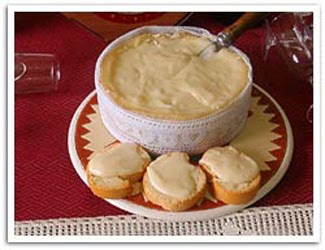
Well, there will be a fair few tapas of this on toast...


Plus lots of carving and scoffing of this...


Washed down with glasses of this...


With readings from this alongside...


All of the above for less than a tenner. You can get hold of a ticket here!


Saturday, 2 November 2013

Patricia Beer on middle age

My recent trip to the U.K. wasn't for a pleasant reason (a family funeral), but it did give me the chance to browse in my favourite secondhand bookshops. I love the thrill of leafing through poetry collections and often making discoveries.

One such case on this occasion was Patricia Beer's Collected Poems (Carcanet, 1988). Later research on the internet indicated that there was more verse from her after that date, but this book still gives a very decent introduction to her work.

Beer's poetry must have been very unfashionable in the eighties and nineties, and it probably still is in many respects. However, she's capable of lovely turns of phrase, coherent fusing of narrative and ideas, and some stunning endings. I was particularly taken with one piece, titled Middle Age, especially in the context of the motive for my visit. Here are two extracts from the beginning and the ending of the poem:

"Middle age at last declares itself
As the time when could-have-been
Is not wishful thinking any more...

...Everywhere I look it is the same,
The churchyard or the other side of the bed,
The one who is not lying there
Could have been."

The circularity is both satisfying and eye-opening. The reader is left to contemplate "who" "could have been" in their own lives. It's a terrific poem.

Thank you once again, secondhand bookshop.

Wednesday, 30 October 2013

Tasting Notes and StAnza at the St Andrews Food and Drink Festival

I'm really looking forward to my next reading in St Andrews on 15th November. Here's the background to the event, taken from the St Andrews Food and Drink Festival website:

"Working with StAnza, Matthew Stewart, exporter and blender for the Spanish cooperative Viñaoliva, leads a guided tasting and talks about the blender’s art. Matthew is also a poet – his entertaining Tasting Notes were published by Fife’s HappenStance Press in 2012. There will be time for interaction and questions, as he introduces the wine of poetry, and the poetry of wine.  Guests will have the chance to taste four Zaleo wines (Pardina 2012, Rosado 2012, Tempranillo 2012 and Premium 2010) and food pairings of ham, bread and Spanish cheese."

£7.50 or £5.00 conc.
[To include tasting, copy of Tasting Notes, and tapas.]

Booking link - https://www.eventbrite.com/event/9010489617

If you're in the area, what could be better than four glasses of wine, a poetry pamphlet and gorgeous tapas alongside, all for less than a tenner? I hope to see you there!

Wednesday, 16 October 2013

Half a comma

I've always been intrigued by the way poets deal with line breaks when giving a reading. Many skip them entirely, often arguing that they are purely a effect to be seen on a page. However, such a view undermines the necessary marrying of content and form, of the aural and the visual. It implicitly lends weight to the school of "chopped-up prose".

Nevertheless, opposing techniques don't convince me either. One such example was a reading by the renowned Spanish poet Jorge Riechmann in Badajoz a few years ago. He placed such an emphasis on his line breaks, marking them with such deliberation, that all flow was lost. Artifice took over.

So, all of the above begs the question: how do I deal with line breaks myself? Well, I refuse to ignore them. What's more, if I want my reader to notice a slight hiatus on the page, I'd also like my audience to feel that same slight pause. My best stab at an explanation would be that I treat a line break as half a comma. That's not a rule. It's not a norm. It's simply the way I imagine my poem being read aloud while I write it, and it's a fundamental part of the music I try to convey when standing up in front of a microphone.