Friday, 27 December 2013

Holiday viewing

I launched the film version of Tasting Notes back in October. If you didn't have the time (it only lasts for four minutes!) to view it back then, why not have a look over the festive period? What's more, it's a reminder of sunnier times and climes in the context of the storms that are battering the U.K. at the moment!

  Tasting Notes - a poetry film by Matthew Stewart from Matthew Stewart on Vimeo.


Thursday, 12 December 2013

Poetry blogs of the year

Back at the end of 2012, I posted about my refusal to name my books of the year. This time round, I thought I'd make an exception, but concentrating on blogs instead of books. That is because 2013 has seen a real surge in poetry blogging and has been an excellent year for the medium, now settled into the perfect fit of its niche beyond Facebook and Twitter.

It's simultaneously difficult and easy to classify poetry blogs. For the sake of this feature, I'm going to place them in groups somewhat, but they don't limit their activity and often break out of any pigeonholing. What's more, I must underline the personal nature of what I'm writng - this doesn't aim to be a full list of U.K. poetry blogs. Instead, it's a snapshot of my personal preferences.

First off, I'll start with an absolute favourite: John Field's Poor Rude Lines. Throughout 2013, Field has concentrated on writing excellent reviews and general criticism of the U.K. poetry scene, with a specific slant on poetry in education. In other words, this is a type of blog that solely looks at other people's work. Moreover, Field was also appointed Guest Blogger at the Aldeburgh Festival, a key sign of just how far the medium has come and how significant his role has been.

Along similar lines, this year has seen the emergence of Gareth Prior's blog. It's packed with excellent articles and reviews, and 2014 should see its consolidation as a point of reference in the world of poetry blogging. Prior's writing is limpid and precise, and he discovers new poetry and new perspectives for his readers. What better recommendation can I give?!

A second grouping of outstanding blogs in 2013 might well include poets who blend their own news with reviews of others' work, original verse and comment on the poetry scene. Let's begin with the veterans: Matt Merritt's Polyolbion, Ben Wilkinson's Deconstructive Wasteland and Rob MacKenzie's Surroundings. They were among the blogs that inspired me to set off on the journey of Rogue Strands, and their content in 2013 has continued to be thought-provoking and full of insight. Among more recent newcomers in this kind of blog, meanwhile, I'd highlight Fiona Moore's Displacement and Maria Taylor's Commonplace.

Another set of blogs, which often blurs and blends with the previous one, is that of the poets who write something of a personal journal. There are many around, but my own favourite reads are Kim Moore, Roy Marshall and Robin Houghton, whose UK Poetry Gal is an extremely honest chronicle of publishing successes and failures - a chance to follow the rollercoaster that's ridden by emerging poets.

And then there are the blogs that focus on providing a space for poets to showcase their work. These play a very generous role. Chief among them are Michelle McGrane's Peony Moon, Josephine Corcoran's And Other Poems and Abegail Morley's The Poetry Shed.

On to a final batch - publishers' blogs. While some are merely marketing machines, others offer the reader a real understanding of life on the other side of the fence. Of course, I'm a fan of Helena Nelson's efforts at my publisher, Happenstance, but I'm also a regular reader of Charles Boyle's thoughts over at Sonofabook, while Todd Swift's views over at Eyewear are always worth a look.

All of the above blogs have lit up my poetic 2013 in very different ways. They enable me to feel part of a community. Far from being a comprehensive list, this is just a sampling of my own choices. I hope this post includss one or two that you might not yet know yourself. Drop into them and enjoy - poetry blogging has never been stronger thatn in 2013!

Tuesday, 10 December 2013

Anthony Wilson's lifesaving poems

Anthony Wilson is an excellent poet with direct experience of life-threatening illness. In that context, one of his online projects, titled Lifesaving poems, is especially relevant. He explains it as follows:

"I was struck by a remark of Seamus Heaney in an interview he gave some years ago now. He was musing on how many poems can affect the life of an individual across that person’s lifetime. Was it ten, he said, twenty, fifty, a hundred, or more? This is the question that has underpinned this pet project of mine since I began it in July 2009...

...My criteria were extremely basic.  Was the poem one I could recall having had an immediate experience with from the first moment I read it? In short, did I feel the poem was one I could do without?"

This is also the key to my own love of poetry - I often feel a collection is a success even if it just contains one single poem that engraves itself on me.

In his series of Lifesaving poems (which begins here), Wilson blogs on how each piece has struck home with him. It's personal, subjective and all the better for that.

Moreover, Wilson's range is extremely wide. He's introduced me to many wonderful poems that I'd never read, often by little-known poets. This is the catalogue of a life's reading. For example, one of my favourite posts is about Suzannah Amoore's An Upstairs Kitchen. It's a terrific chunk of verse by a poet who's disappeared from view, and I'm grateful to Wilson for having shown me the way to it.

Why don't you have a browse for yourself? There really are poems that can save your life.


Thursday, 28 November 2013

Simplicity's tightrope

Many critics (and thus poets) equate verbal fireworks with poetic risk-taking and depth. That might sometimes be right, but the opposite can also be true.

Syntactic simplicity is just as capable of ambition and is even more dangerous as its opposite number. Moreover, there's no gorgeous language to hide behind if the verse falls flat on its face. As a consequence, I hugely admire poets who write in such a way.

Hamish Whyte is a case in point, and his new HappenStance pamphlet, Hannah, are you listening? is an excellent example of such a kind of verse. Yes, there are poetic failures in the book, as in any collection. Yes, they are stripped naked for inspection. However, that also means that the successes are crystalline and memorable. One such instance is the ending to the title poem:

"...It's only a tiny chime
but I hope you hear it through ineluctable time."

The musical effect of the assonance is heightened by Whyte's semantic clarity. What's more, his poetic method means that strands of observation stand out, as in the opening lines from One of those lives:

"One of those lives
that's more a tone of voice
than a biography..."

I'll carry that turn of phrase with me for a long time. Poetry doesn't have to be flash to be memorable.

Hamish Whyte dares to walk simplicity's tightrope in this pamphlet. I love watching him do so, especially when he reaches the other side and I can't resist a huge, silent cheer. I very much recommend Hannah, are you listening? to any reader who cares to join me.


Thursday, 21 November 2013

Grace

In the light of a turbulent week for U.K. poetry, with far too many strops, spats and sulks going on via social media, it was incredibly refreshing to read Kim Moore's blog about having been shortlisted for the Michael Marks Awards and missing out on the prize itself. Her post was shot through with honesty and grace. You can read the piece in full here.

Thursday, 7 November 2013

On the menu in St Andrews...

Just what will be on the menu in St Andrews on Friday 15th November?

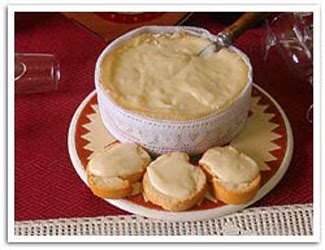
Well, there will be a fair few tapas of this on toast...


Plus lots of carving and scoffing of this...


Washed down with glasses of this...


With readings from this alongside...


All of the above for less than a tenner. You can get hold of a ticket here!


Saturday, 2 November 2013

Patricia Beer on middle age

My recent trip to the U.K. wasn't for a pleasant reason (a family funeral), but it did give me the chance to browse in my favourite secondhand bookshops. I love the thrill of leafing through poetry collections and often making discoveries.

One such case on this occasion was Patricia Beer's Collected Poems (Carcanet, 1988). Later research on the internet indicated that there was more verse from her after that date, but this book still gives a very decent introduction to her work.

Beer's poetry must have been very unfashionable in the eighties and nineties, and it probably still is in many respects. However, she's capable of lovely turns of phrase, coherent fusing of narrative and ideas, and some stunning endings. I was particularly taken with one piece, titled Middle Age, especially in the context of the motive for my visit. Here are two extracts from the beginning and the ending of the poem:

"Middle age at last declares itself
As the time when could-have-been
Is not wishful thinking any more...

...Everywhere I look it is the same,
The churchyard or the other side of the bed,
The one who is not lying there
Could have been."

The circularity is both satisfying and eye-opening. The reader is left to contemplate "who" "could have been" in their own lives. It's a terrific poem.

Thank you once again, secondhand bookshop.